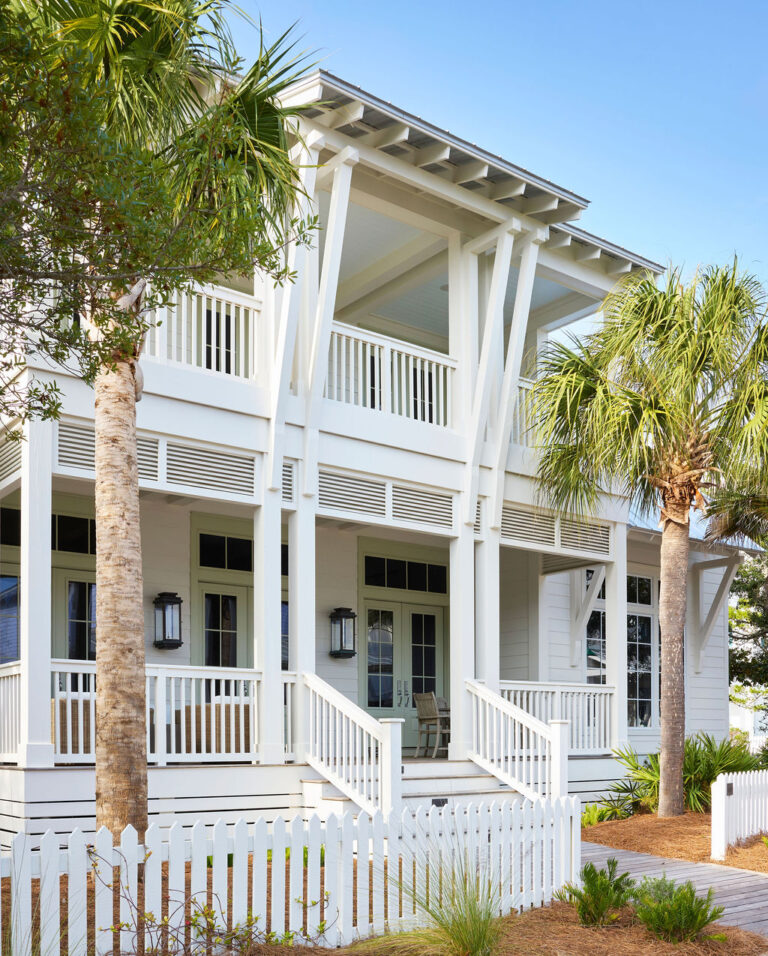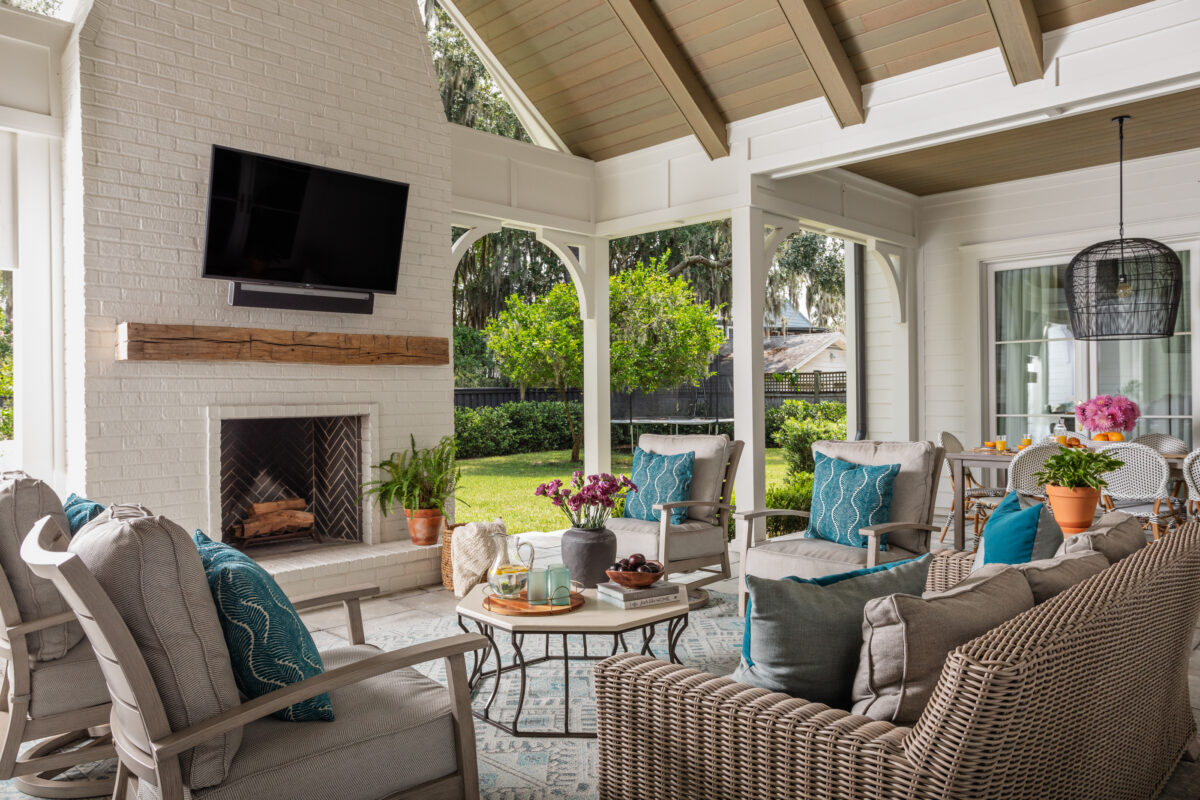
At Twin Construction, outdoor spaces are never treated as an afterthought. Covered porches, screened rooms, and outdoor living areas often become some of the most used spaces in a home. Twin’s Interior designer Laurie Fulkerson approaches these spaces with the same intention and care she brings to interiors, creating outdoor rooms that feel seamless, functional, and inviting.
In this interview, Laurie shares how she designs outdoor living spaces that support real life, from early planning questions to material selections and the small details that make a big difference in how these spaces are used.
When designing an outdoor space, how do you view its role within the home?
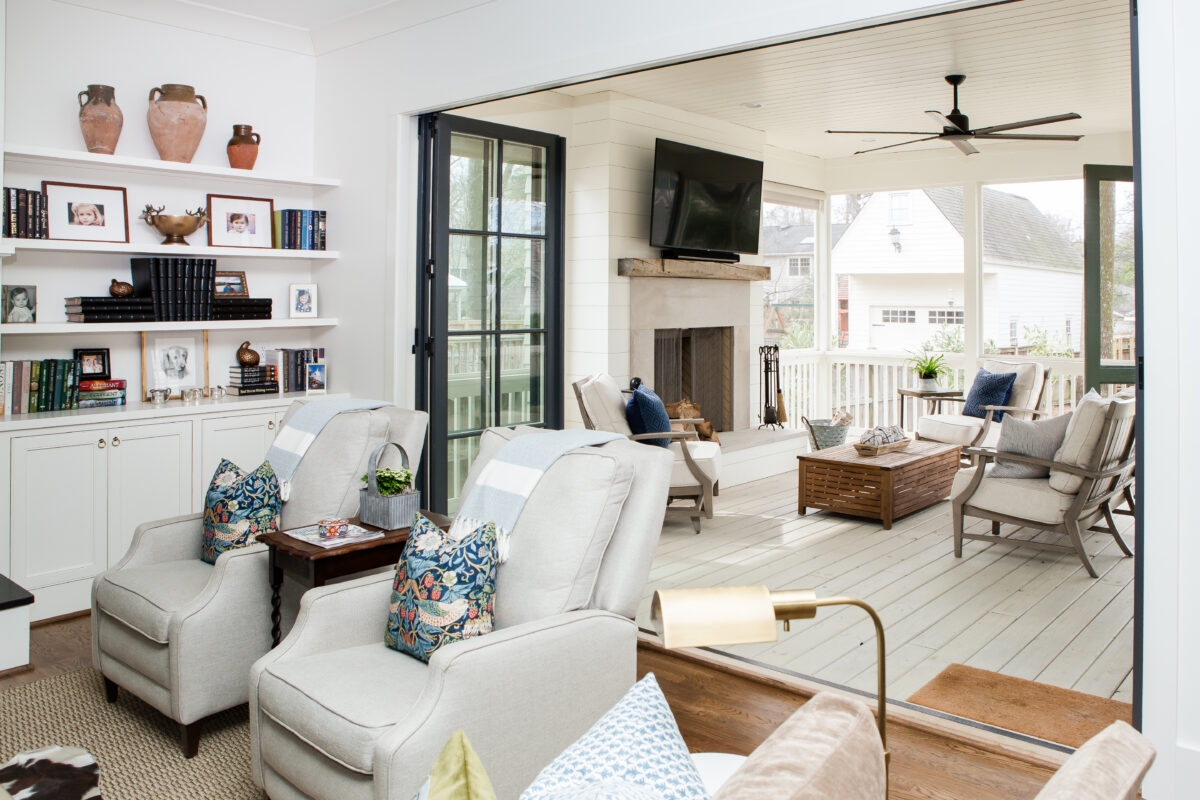
“When designing an outdoor space, I view it as a true extension of the home rather than a separate area. The goal is for it to function as an additional living space that supports how the family actually lives day to day. I consider how the space will be used—entertaining, dining, relaxing, play, or quiet retreat—and design zones that flow naturally from the interior.”

What questions do you ask early on to understand how clients want to use covered or screened porches?
“Asking clients what they don’t like about their current outdoor living is always a great place to start. Many of our clients will have preferences about screen porches versus covered porches, including wanting a dining space because they did not have one previously. Do they want to use it seasonally, or do they prefer to use it year-round? Do they entertain a lot?”
How do lifestyle factors—like entertaining, family life, or quiet relaxation—shape the design of outdoor living areas?
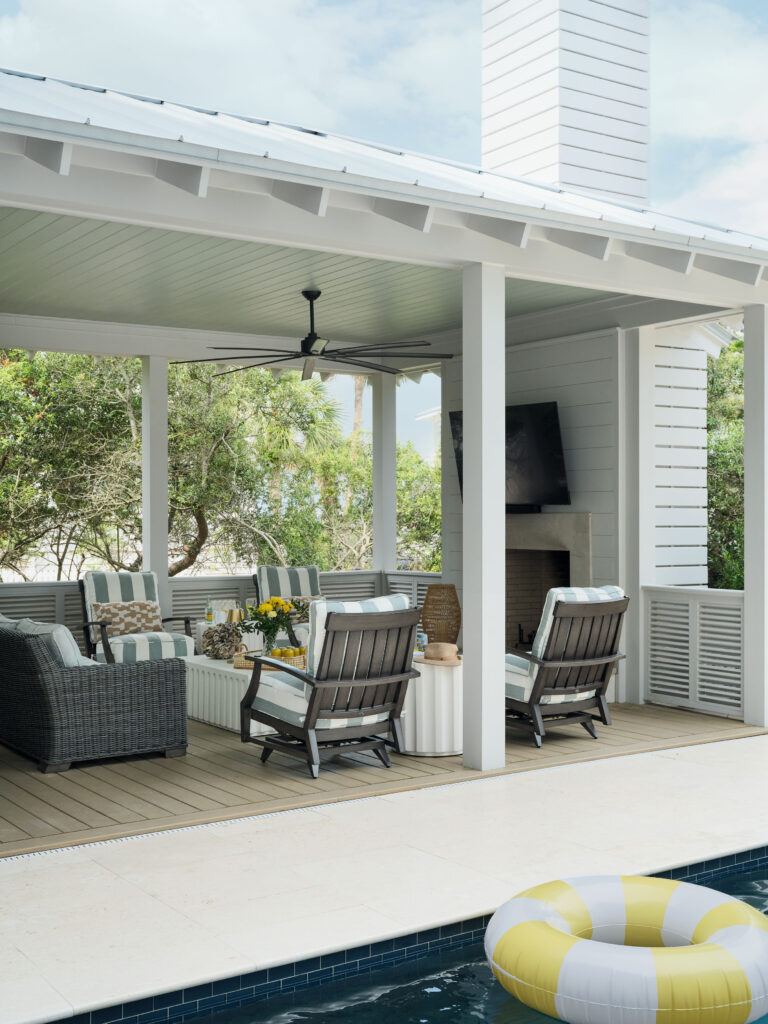
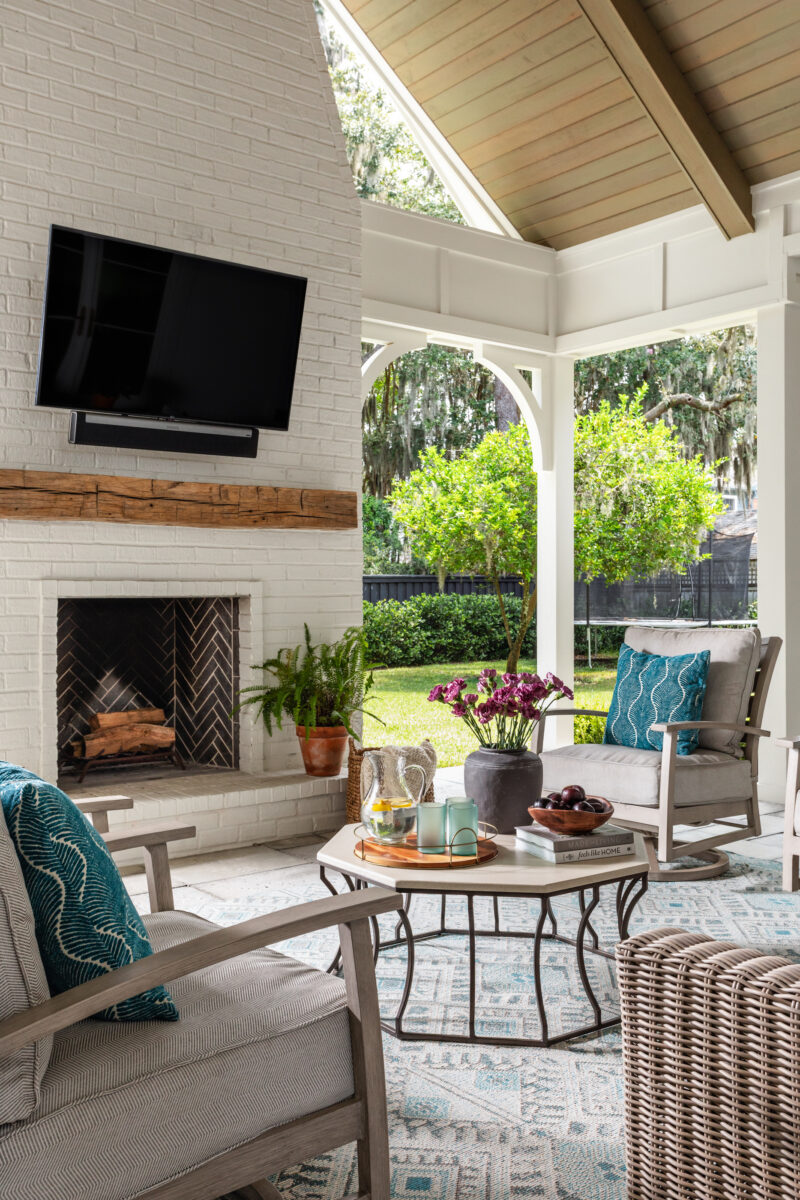
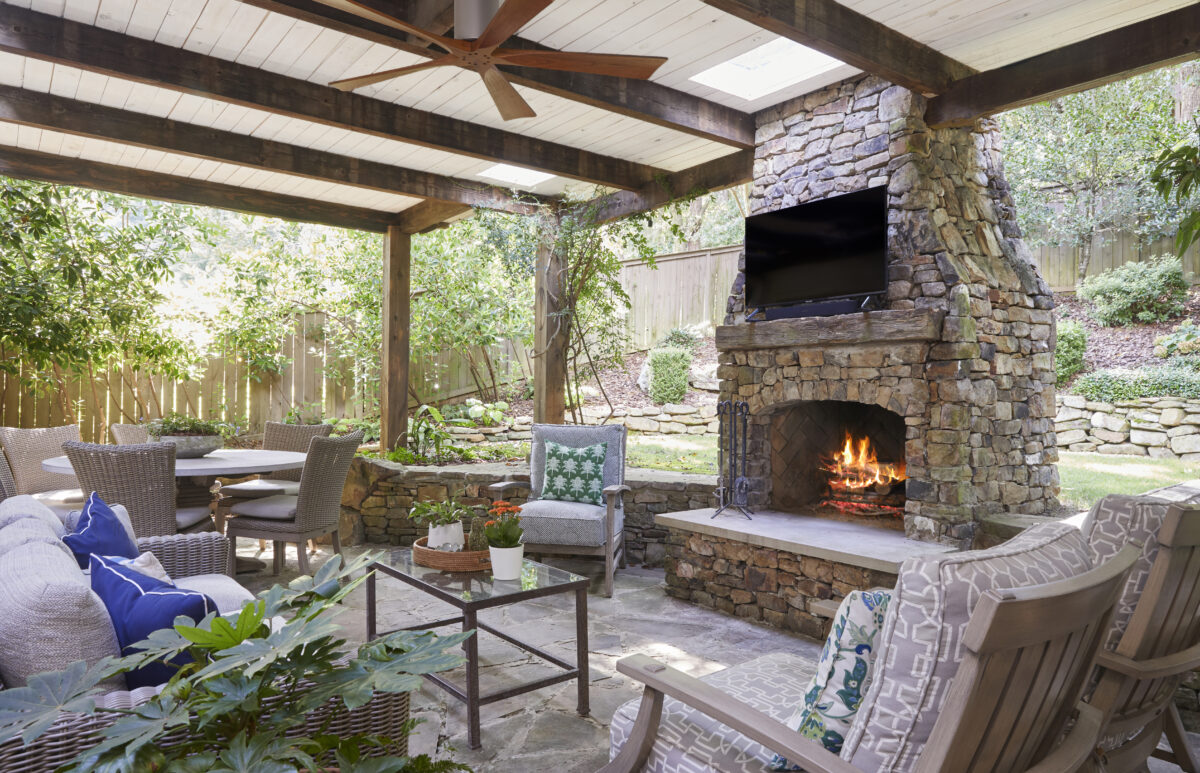
“If they entertain a lot, we always try to accommodate a porch that includes a space for grilling (no one likes to be the grill master and separate from the family!), a space for lounging or TV watching, and a space for dining. This allows for areas that can accommodate multiple needs—whether they are entertaining, having a family meal, or enjoying a quiet place to read a book or take a nap.”
What design elements help create a seamless transition between indoor spaces and outdoor rooms?
“Materials, scale, and furnishings are selected to feel cohesive with the home, while also being durable and appropriate for outdoor use. I always encourage using items that are rated for outdoor use for everything from ceiling fans and exterior lighting to rugs, furniture, and fabrics—cushions and pillows included. These items prevent disappointment later with our outdoor elements.”

How do you choose materials and finishes that balance durability with comfort and style?
“Always use products that are made for outdoors. This includes furniture rated specifically for outdoor use. With our summer heat, a regular piece of furniture cannot withstand multiple summers in our climate. Outdoor-rated items should be used for everything—fans, furniture, rugs, lighting, and more.”
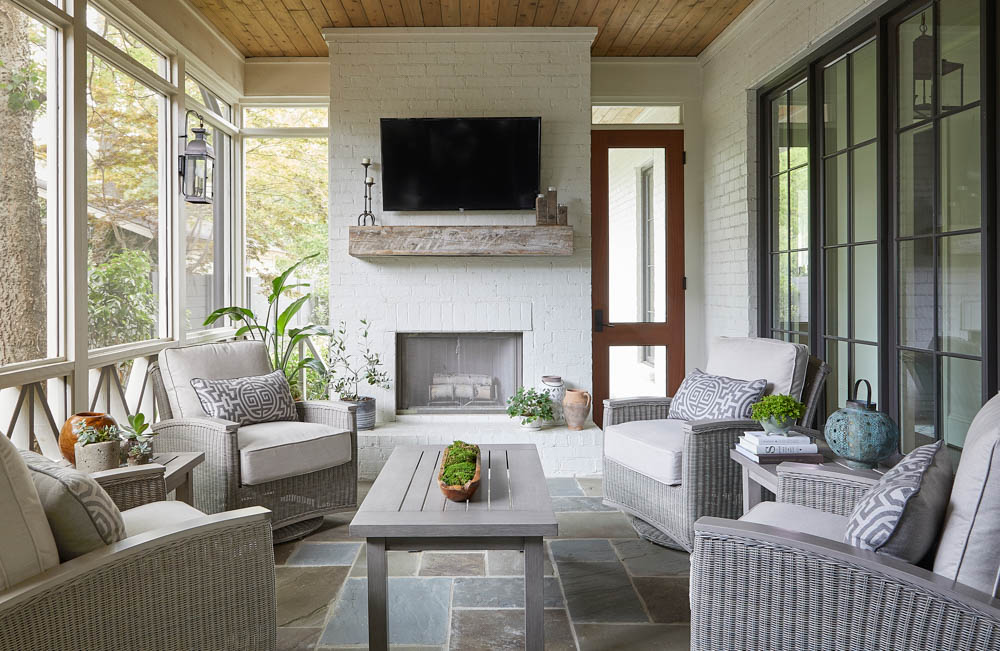
What features make a covered or screened porch usable across multiple seasons?
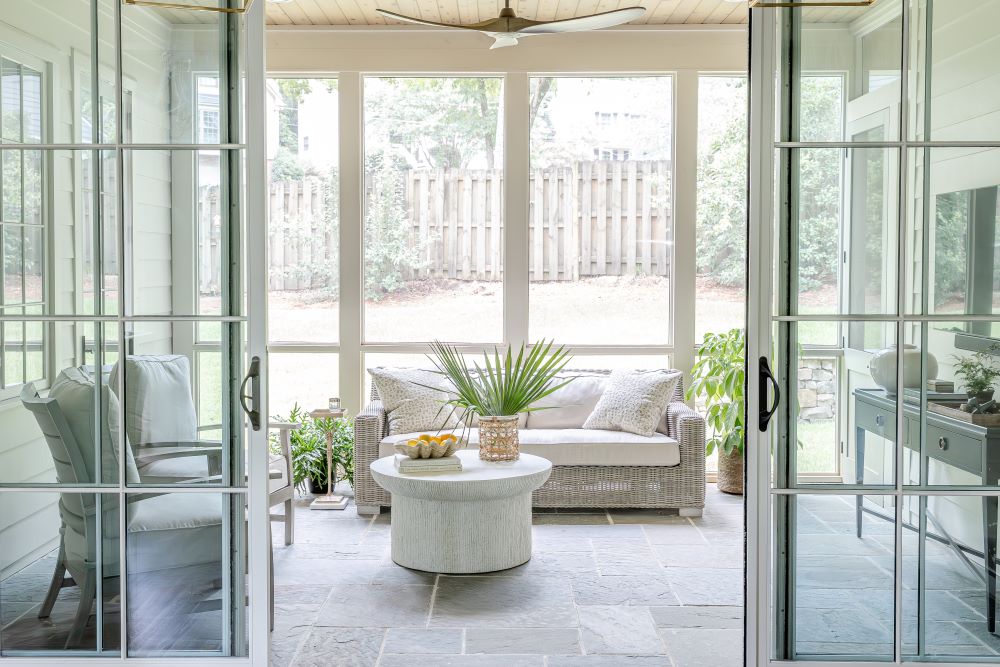
“I think a screen porch is great for all seasons due to our mosquito population. However, I have seen a big interest in retractable screens that allow you to raise them when you don’t need them. These are also helpful when it comes to cleaning your porch space. Including fans that are large enough for the space and permanent heaters that can be mounted on ceilings or walls makes a big difference. We get great feedback from clients who install these. These features need to be planned during the framing and electrical stage.”
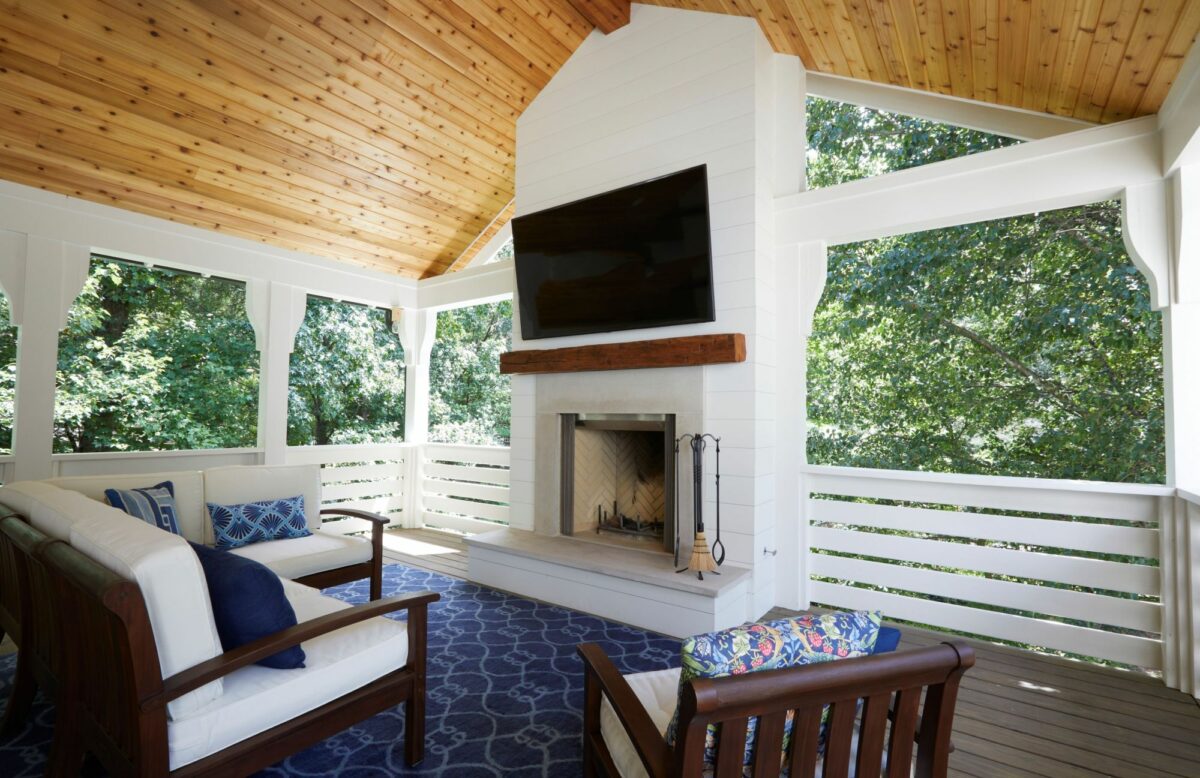
How do lighting choices impact the functionality and ambiance of outdoor spaces?
Laurie: We typically install can lighting on screen porches along with fans, but I always recommend putting the can lights on a dimmer switch. There are many times you may want to dim the lights for ambiance. I also always recommend installing a plug near the porch ceiling for patio string lights, which are so popular. Including plugs in specific areas for future furniture, lamps, and other needs is also important.
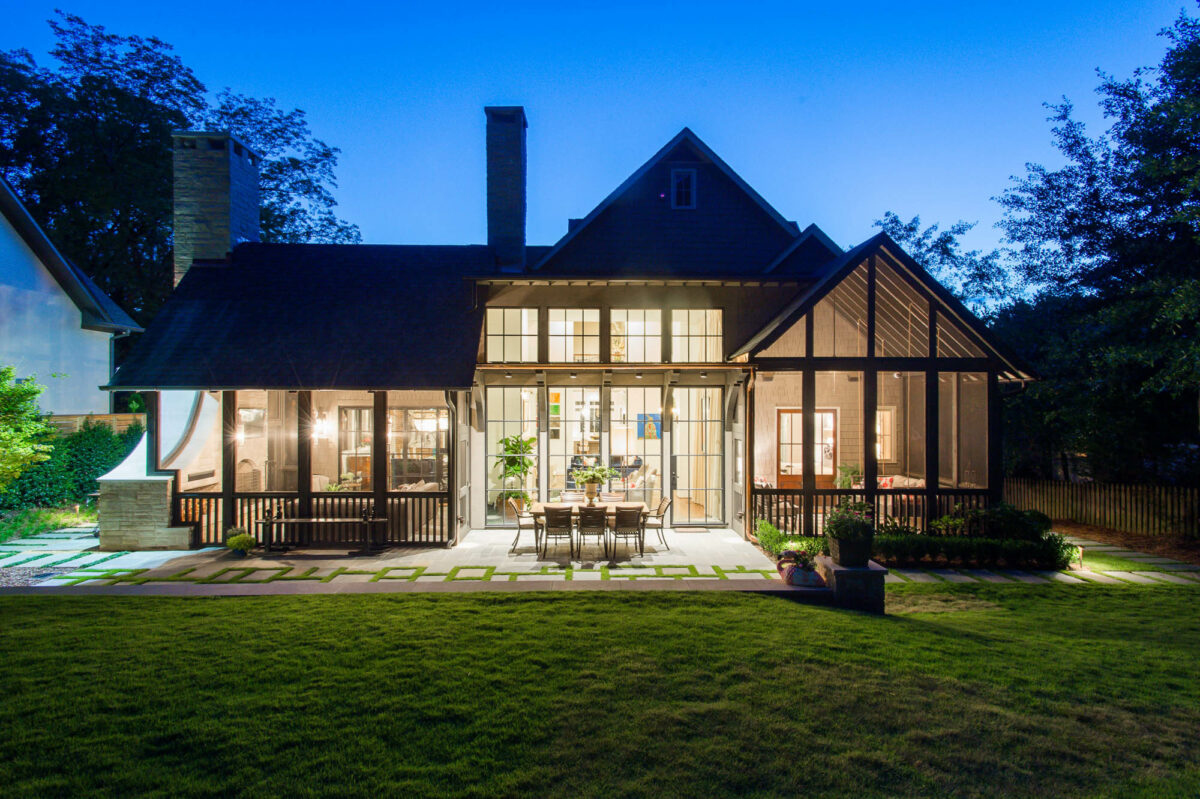
What common mistakes do homeowners make when planning outdoor living areas?
“Not including enough plugs and not building the space large enough to accommodate the needs of your family—a space for lounging and a space for dining is essential.”
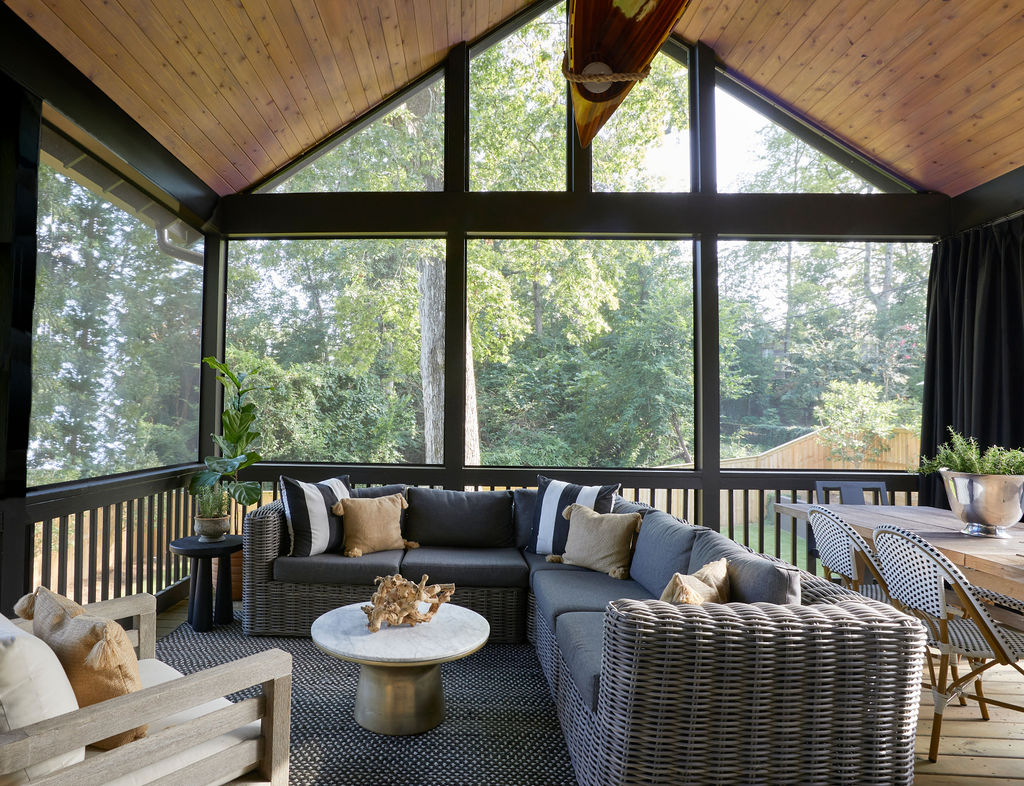
What design detail do you think has the biggest impact on how much a space is actually used?
“Making sure there are multiple seating areas. Families and party guests always gravitate to the outdoor spaces.”
What advice would you give to someone just beginning to plan an outdoor living space?
“Listen to your builder, architect, and designer. We have built many porches and have great feedback for this space, which will be used more often than you think if you plan accordingly.”
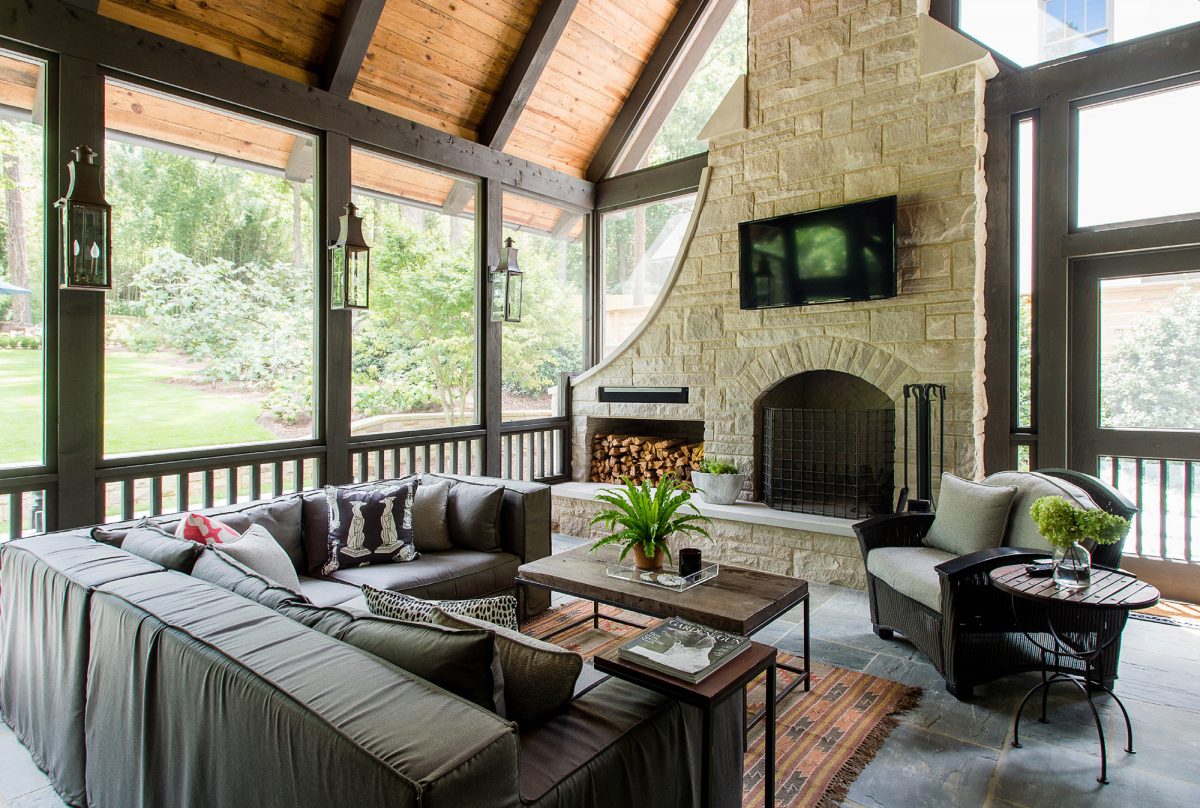
Thoughtfully designed outdoor spaces have the power to become the heart of the home—places where everyday moments and special gatherings naturally unfold. With careful planning, durable materials, and attention to how families truly live, these spaces can be enjoyed year-round and for many years to come.
At Twin Construction, we believe outdoor living should feel just as intentional and inviting as the spaces inside the home—and this approach is what transforms a porch into a true extension of everyday living. Interesting in building an outdoor space for home? We’d love to hear from you!